How to Play
Four phases · 90 minutes
Every claim needs evidence. Every sample has a cost.
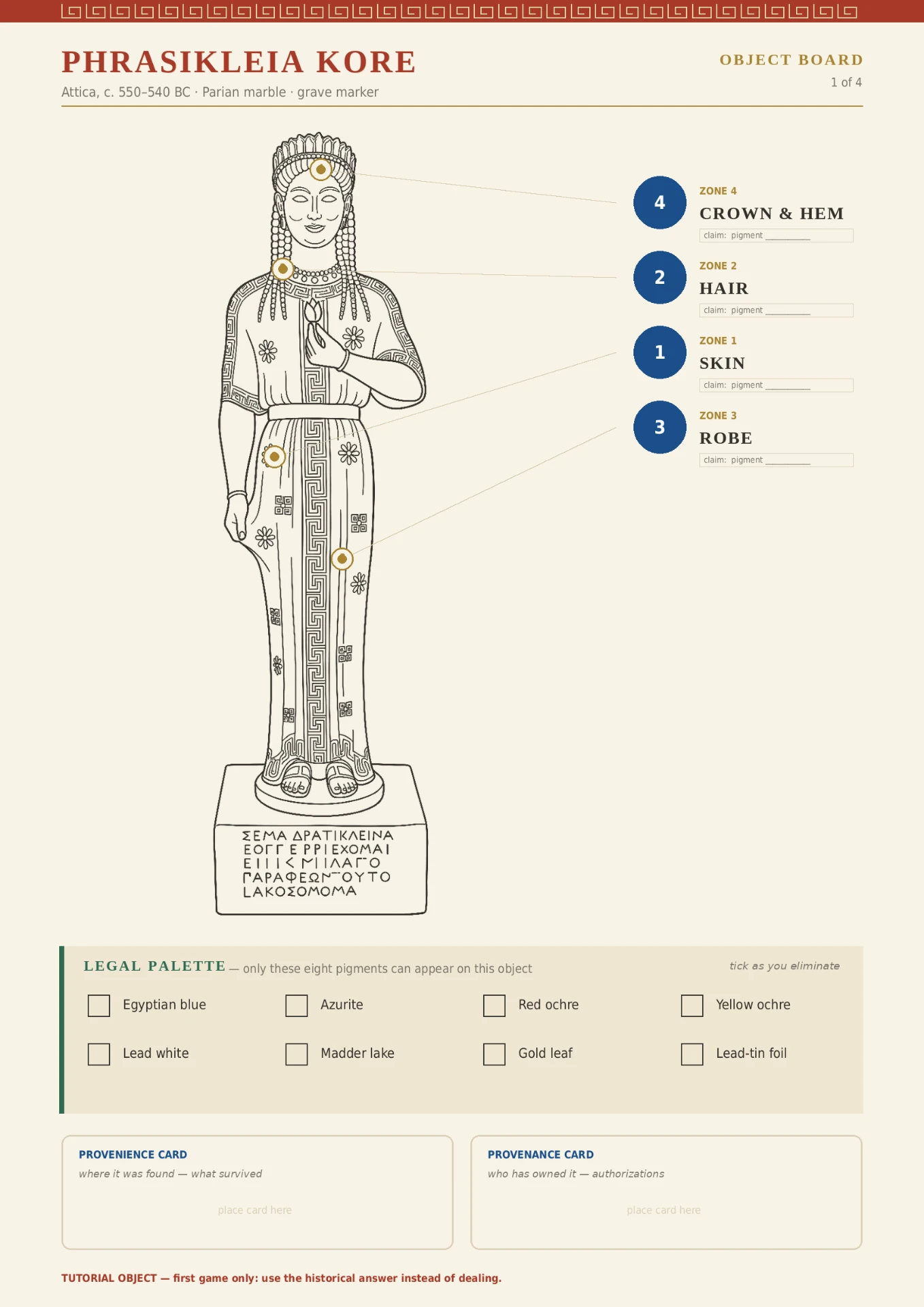
The four phases
- 1
Excavate
Draw a Fragment card and its Context card. Place colour-trace tokens on the sculpture board.
- 2
Analyse
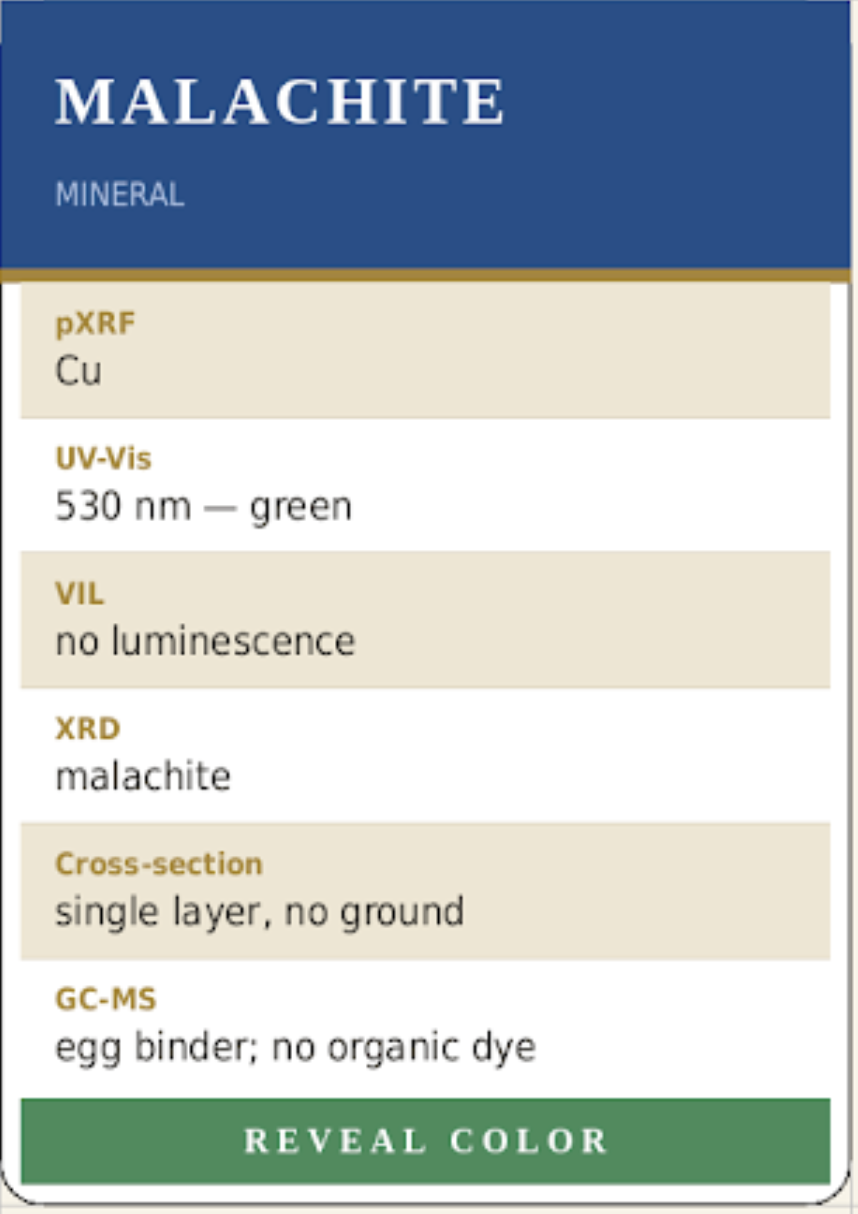
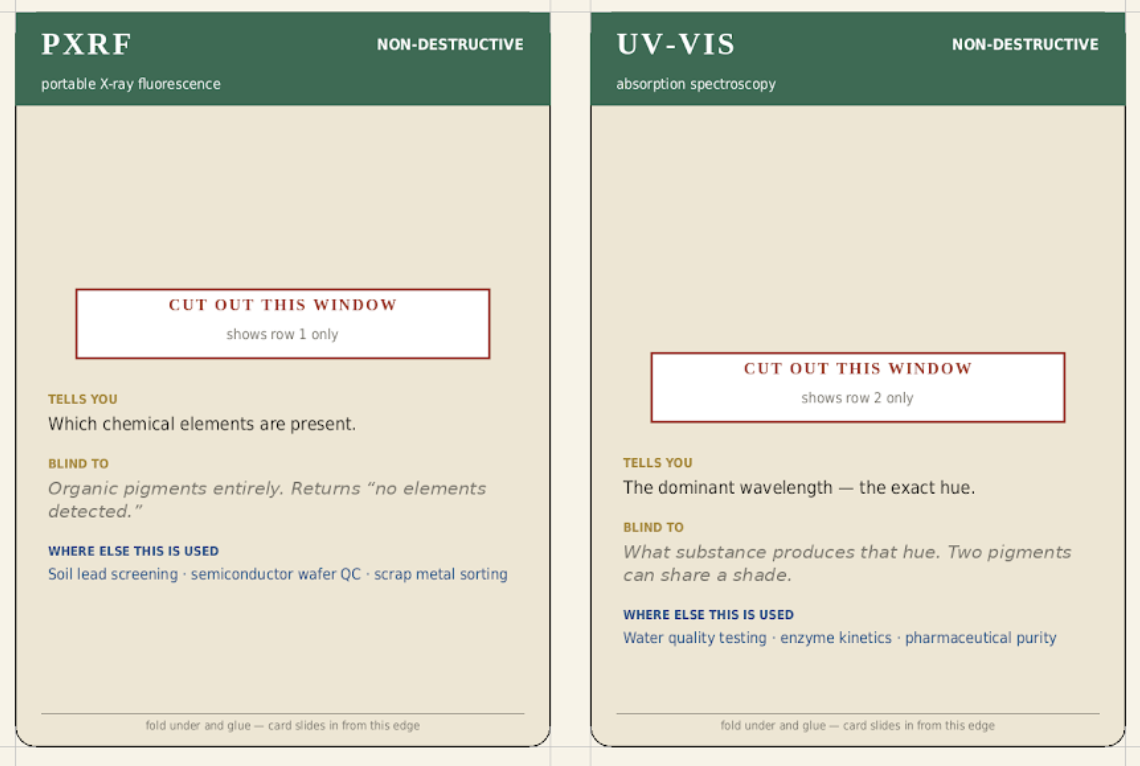
Spend Lab Time to run techniques. Each returns a data card — some decisive, some ambiguous.
- 3
Interpret
Match evidence to pigments. Ethics cards may forbid destructive sampling or demand consultation.
- 4
Defend
Present your reconstruction. Rival teams may challenge any claim not backed by two lines of evidence.
Sample lab data card
| Technique | Reading | Indicates | Sampling |
|---|---|---|---|
| XRF | Hg, S | Cinnabar | Non-destructive |
| Raman | Band 343 cm⁻¹ | Cinnabar | Non-destructive |
| VIL imaging | Infrared glow | Egyptian blue | Non-destructive |
| Cross-section | Layer sequence | Any | Destructive |
Reassessment
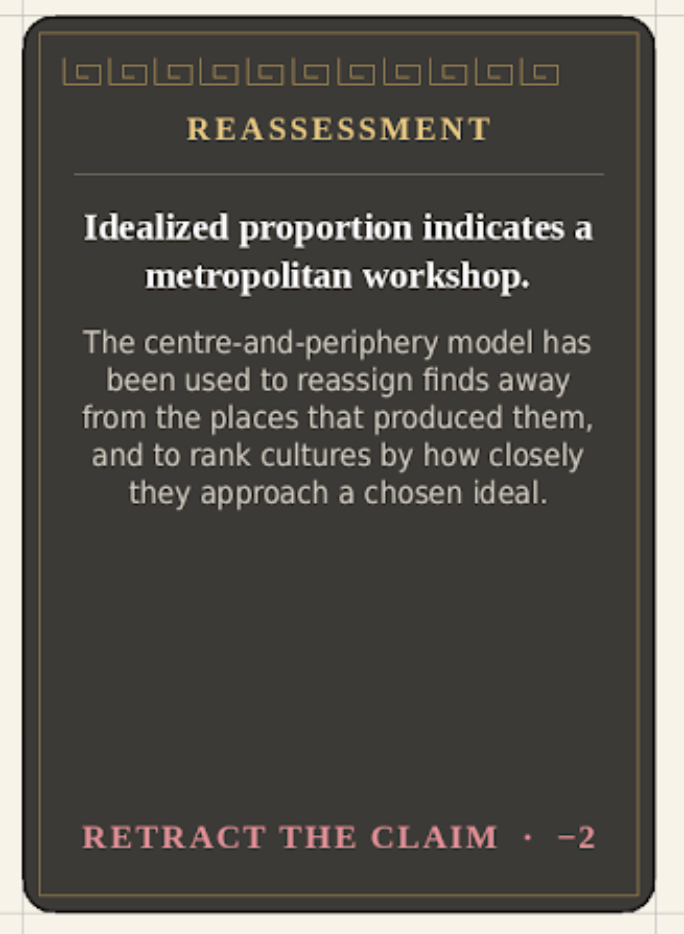
Assumptions are free — until they are not. At Reassessment, every claim that rested on an assumption instead of evidence is retracted, and the team loses points. The game rewards what you can show, not what you believe.
Module A cards voice the discipline's historical shortcuts; Module B puts the object itself on trial before a chosen forum.